World of Warships Legends PvP
- 4.2
- Rating
- 500.00K
- Installs
- Free
- Price

 Analysis by App-foxy
I spent time with World of Warships Legends PvP as a mobile action game built around competitive naval battles, and my first impression was that it asks for more attention than its title might suggest. This is not a quick tap-and-forget experience. The appeal comes from reading the water, choosing when to expose a ship, managing an attack window, and trying to make useful decisions while opposing players are doing the same thing.
That focus makes it a good fit for players who enjoy multiplayer action with a tactical layer. The match format is built around real-time teams of nine, so individual skill matters, but so does understanding where your ship belongs in the larger fight. I found the strongest moments came from small decisions: holding fire to avoid revealing my position, changing course before an enemy attack arrived, or moving toward an objective instead of chasing a damaged opponent.
It is free to download, although optional purchases range from $0.99 to $149.99 per item. That makes the starting point easy to try, but anyone who becomes invested should approach the purchase options carefully. The game is rated Teen, runs on Android 9 or later, and comes from Wargaming Group. Its current version is 8.6.4.0, while the mobile release arrived on March 26, 2024.
You May Also Like

 Blood Strike: 2.5 Anniversary
Blood Strike’s Loadouts Turn Every Drop Into a Tactical Gamble
A close look at Blood Strike’s custom loadouts: how fast access to signature weapons reshapes its battle royale rhythm, rewards preparation, and narrows the gap between fights.

 Pandora - Music & Podcasts
Pandora’s Music Is Easy to Start, but Harder to Recover
Pandora’s strength is its low-effort path from a seed to a station. Its weak spot is how much confidence it asks you to place in connection, setup, and quiet recovery.

 8 Ball Pool
 Is Built on Rivalries, Rematches, and Routine
A close look at the rivalries, rematches, shared routines, and unanswered safety questions that turn a quick pool match into a persistent mobile community.

 Samsung Music
’s Quiet Strength Is Playing What You Already Own
Its reach comes less from spectacle than from dependable access to a personal library. That simplicity is both the app’s strongest retention engine and its ceiling.

 AccuWeather: Weather Radar
AccuWeather Review: A Quick, Clear Forecast for Everyday Decisions
For everyday plans, the best forecast is the one you can understand quickly. AccuWeather makes rain timing, radar, and local conditions easy to act on, with a few trade-offs.

 Hill Climb Racing
Why Hill Climb Racing Still Turns Crashes Into One More Run
A tiny car, a bumpy hill and one more upgrade: Hill Climb Racing keeps resurfacing because its simple chaos makes every near-miss feel personal.
More From Our News Desk
View All News


How the first battles create a reason to keep playing
The early goals are straightforward: learn how the ships behave, survive enough encounters to understand the rhythm, and work toward improvements that make future battles more comfortable. I liked that the basic motivation is easy to understand even before I had a strong grasp of naval tactics. I wanted to see whether a different ship would suit my style, whether I could contribute more consistently, and whether better decisions would matter more than simply charging forward.
That last point is important. A new player can mistake movement for progress and spend the opening moments rushing toward the action. In practice, the early learning process rewards patience. A ship that moves into danger without support can become a liability, while a cautious position can create a better firing opportunity later. My most useful early habit was to treat the opening phase as information gathering rather than an invitation to fire at the first visible target.
The upgrade loop gives those early matches a purpose beyond winning or losing. Improving a ship is not just about making a number larger; it changes how I think about risk. When I feel more confident in a vessel, I am more willing to contest space. When I am still learning its limitations, I prefer to remain close enough to support teammates without becoming the first easy target.
One practical tip is to test a ship’s turning and stopping behavior before committing to an aggressive route. The water can make mistakes feel slower than they really are. By the time I recognized that a broad turn had exposed too much of the ship, correcting course was often no longer possible. Learning that handling pattern early saves more frustration than repeatedly blaming an unlucky engagement.
The nine-versus-nine structure also gives beginners a little room to learn. A single poor decision does not always end the battle immediately, but it can still affect the team’s options. That balance helped me continue after mistakes. I could identify what went wrong without feeling that every error erased the entire match.
Small progress signals matter more than dramatic rewards
The most satisfying progress signal is not simply unlocking something new. It is noticing that I understand the battlefield better than I did a few matches earlier. I began to recognize when an attack was premature, when a retreat protected the team, and when an apparently safe route would leave me unable to help anyone. Those improvements are subtle, but they make later matches feel more deliberate.
Ship upgrades support that feeling by giving me a reason to revisit familiar situations. A stronger setup can make a ship more dependable, yet it does not remove the need to position well. That trade-off keeps the game from feeling like a purely automatic climb. I still have to make the right choice at the right moment, especially when several opponents are visible and the safest target is not necessarily the most valuable one.
I also found that progress is easier to appreciate when I set a narrow goal for a session. Instead of judging the whole evening by victories, I might focus on staying alive long enough to support a flank, avoiding unnecessary exposure, or learning how a particular ship handles under pressure. This approach makes a difficult match useful rather than wasted.
For someone deciding whether to install it, that is a key distinction. If you need constant unlocks and immediate rewards, the naval pacing may feel restrained. If you enjoy seeing your own judgment improve, the game offers a more lasting form of advancement. The store rating is a 4.2 average from around 11K ratings, and the game has passed 500K installs, but those figures do not replace the more personal question: do you enjoy learning through repeated competitive situations?
The answer is likely yes if you enjoy comparing approaches. I could play more cautiously, stay near allies, and wait for a clear opportunity, or I could take a more active role and accept greater exposure. Neither style guarantees success. The useful part is discovering which decisions consistently help rather than assuming that the most aggressive player is always making the most progress.
The difficulty curve rewards awareness, not just faster reactions
The difficulty curve is gentler at the beginning than it becomes once players understand the basic controls. Early on, I was mainly trying to keep the ship moving sensibly and avoid obvious danger. Later, the challenge came from predicting what other players might do. A visible enemy could be baiting an approach, while an apparently quiet side of the map could become dangerous if the team moved too far forward.
This is where the action category matters. The game has the immediate tension of a battle, but the best results come from decisions made several moments before the attack. I often felt that the decisive mistake happened before the shot was fired: taking an exposed route, separating from support, or committing to a target that was no longer worth pursuing.
One non-obvious lesson is that retreating can be an active play rather than a sign of failure. Pulling back can preserve a ship, buy time, and force opponents to advance into a less comfortable position. I had better matches once I stopped treating every withdrawal as lost momentum. The goal is not to remain in the most forward position at all times; it is to remain useful when the battle changes.
Another useful habit is to avoid tunnel vision around damaged opponents. A nearly defeated ship is tempting, but chasing it can expose the side of the ship or pull me away from a more important area. I learned to ask whether finishing that target would improve the team’s position. Sometimes it did. Often, keeping a safer angle against a different threat was the better choice.
The game is less suitable for people who want a purely casual shooter with instant recovery from mistakes. A poor opening can create problems that continue through the rest of a match. It is also not ideal if you dislike team-dependent outcomes. Even a strong personal performance may not produce a win when the wider battle develops badly, and that can feel unfair if you measure every session only by the result screen.
Compared with faster mobile action games, this one gives positioning more weight than reflex speed. Compared with turn-based naval games, it demands more immediate adjustment because opponents are acting at the same time. That middle ground is its identity: the pressure is real-time, but the satisfying decisions are often calculated rather than frantic.
Where the pacing helps, and where it can create pressure
The pacing works best when I have enough time to observe the situation and make a meaningful choice. A match can begin quietly, then become tense as ships approach useful firing positions. That gradual build makes successful attacks feel earned. I was not simply reacting to a flashing target; I was often using the earlier movement of both teams to guess where the next opening might appear.
There is a retention pressure built into that structure. After a close defeat, I usually wanted another attempt because I could identify one decision I would change. That is a healthy reason to continue when the motivation comes from learning. The less healthy side appears when progress, upgrades, or purchases start to make a session feel like an obligation rather than a choice.
Because the game is free, the optional purchase range deserves attention from anyone who is sensitive to spending pressure. I recommend playing long enough to understand whether the core battles are enjoyable before buying anything. If the basic loop does not feel good with the ships and progress available at the start, a purchase is unlikely to solve the underlying problem. Spending should support a game you already enjoy, not persuade you to tolerate it.
Another practical consideration is session length. This is not the game I would open when I have only a few seconds between tasks. A realistic everyday scenario would be a short break after work or study: I could play a couple of battles, review what went wrong, and stop after reaching a natural pause. I would not recommend starting it immediately before an appointment, because a competitive match is a poor fit for a rushed schedule.
The Teen rating also makes it more appropriate for older players than for young children. The combat theme is central, and the competitive setting can be intense. Parents choosing it for a teenager should also discuss optional purchases in advance, especially because the individual item range reaches from small amounts to $149.99.
For players worried about device compatibility, the Android requirement begins at version 9. That is helpful for avoiding an installation surprise on older phones, although compatibility alone does not guarantee a comfortable experience. Naval battles involve a lot of movement, targeting, and visual information, so a device that struggles with demanding 3D games may not provide the experience I would want for competitive play.
Who will enjoy the progression, and who should skip it
I would recommend this game to someone who likes multiplayer competition but wants more decision-making than a conventional run-and-gun match. It suits players who enjoy improving through observation, comparing ship choices, and learning when to attack or disengage. It is also a good option for anyone who likes a clear long-term reason to revisit battles instead of treating each match as an isolated event.
I would be more cautious recommending it to someone who wants a relaxed solo experience. The appeal is tied to player-versus-player uncertainty, so the experience depends on the behavior of other people and on team coordination. If you prefer predictable enemies, a story campaign, or a game that can be paused whenever necessary, a single-player action title will probably serve you better.
It may also frustrate players who dislike gradual mastery. The controls can be understood quickly, but understanding the consequences of movement, exposure, and timing takes longer. That is not a flaw for me, yet it means the first sessions may feel less rewarding than a game that gives immediate power and constant visual feedback.
My strongest advice is to choose a personal learning target before each session. Focus on one ship’s handling, one positioning mistake, or one kind of engagement. This turns the progression system into a practical training loop. Instead of asking only whether I won, I can ask whether I made a better decision than before. That approach also reduces the temptation to chase upgrades without understanding how they affect play.
My progression verdict after weighing the full loop
World of Warships Legends PvP sustains play through a combination of ship improvement, competitive uncertainty, and the desire to make better decisions in the next battle. Its early goals are accessible, while its deeper challenge comes from positioning and timing rather than simply learning to aim. I found the progression most satisfying when I treated upgrades as tools for refining a play style, not as substitutes for judgment.
The game’s main weakness is that its pace and team dependence will not suit everyone. Matches demand attention, mistakes can have lasting consequences, and the free-to-play structure includes optional purchases that require self-control. Players looking for instant action, guaranteed personal rewards, or a completely independent experience should look elsewhere.
For me, the best reason to try it is the way a small improvement can change an entire battle. Holding back for a few seconds, choosing a safer angle, or abandoning a tempting chase can matter more than frantic activity. That gives the game a satisfying learning curve without pretending that every loss is entertaining.
With a 4.2 average and more than 500K installs, it has clearly found an audience, but I would judge it on the kind of attention it asks from you. If real-time naval combat, team tactics, and steady mastery sound appealing, the free entry point makes it worth exploring. If you want a quick arcade distraction with no commitment, I would skip it. My final view is positive: the progression works best when you value improved decisions as much as new ships, and that makes this a stronger action game than its simple mobile format initially suggests.
FAQs for World of Warships Legends PvP
01What is World of Warships: Legends PvP?
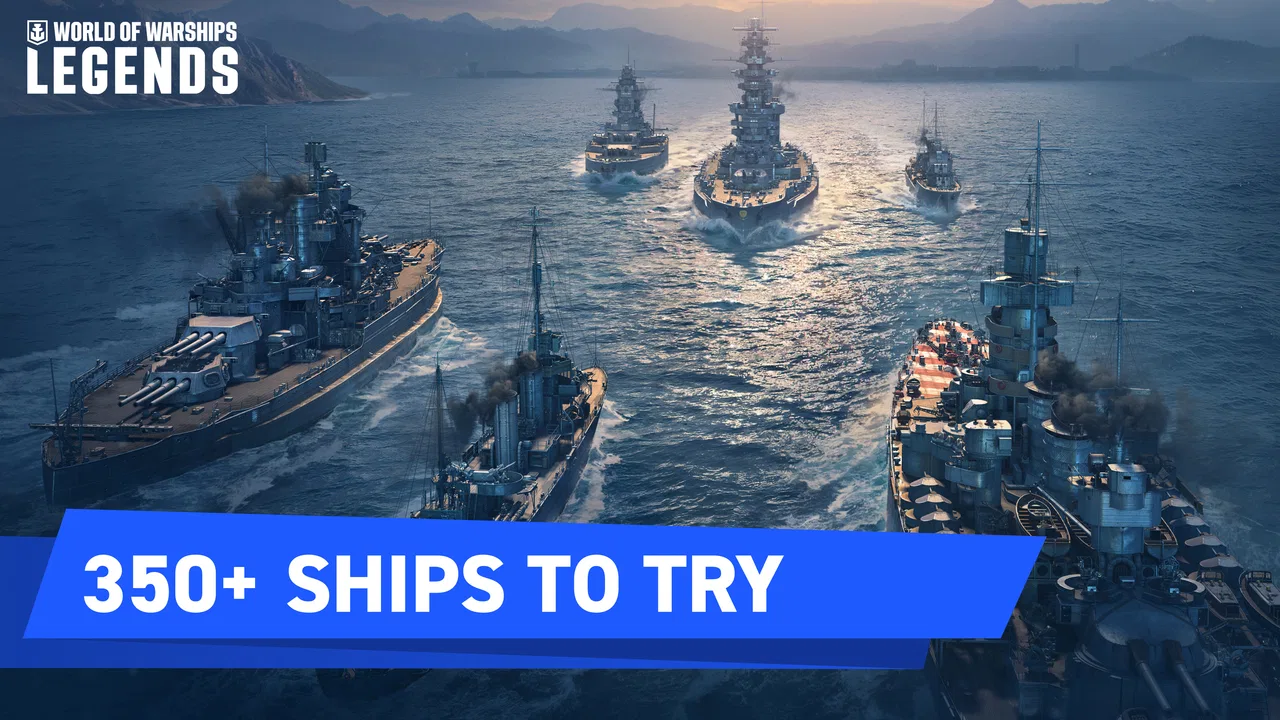
World of Warships: Legends PvP is a competitive naval combat game focused on team-based battles between warships. Players command vessels from different nations and eras, choosing destroyers, cruisers, battleships, or aircraft carriers according to their preferred play style. Matches require positioning, map awareness, teamwork, and careful use of each ship’s strengths rather than simply firing continuously at opponents.
02Is World of Warships: Legends PvP free to play?
Yes, World of Warships: Legends PvP can be played for free, although it includes optional in-game purchases. Players may encounter premium ships, cosmetic items, boosters, and other content that can be bought using real money. The game is designed around progression and unlockable ships, but advancing efficiently may require patience, regular play, or occasional spending. Check the store and parental settings before making purchases.
03Does the game require an internet connection?
Yes, World of Warships: Legends PvP is primarily an online multiplayer experience and requires a stable internet connection for its battles and account-related features. It is not intended to be played fully offline. A weak or inconsistent connection can cause lag, delayed controls, or disconnections, which may negatively affect both your performance and your team’s chances of winning.
04Is World of Warships: Legends PvP suitable for beginners?
The game is accessible to newcomers, but its mechanics can take time to learn. New players must understand aiming, ammunition types, concealment, spotting, armor protection, ship roles, and map positioning. Early battles may feel challenging, especially when facing experienced opponents. Tutorials, lower-tier ships, and practice through repeated matches help beginners improve before progressing into more demanding competitive encounters.
05What devices and performance requirements should I consider before downloading?
Before downloading World of Warships: Legends PvP, check that your device meets the current operating-system and hardware requirements listed on its official store page. The game contains detailed ships, large battle environments, and online effects, so performance can vary between devices. You should also reserve sufficient storage for the initial installation and future updates, and use Wi-Fi when possible to reduce mobile-data consumption.
Pros
- Strategic naval battles reward teamwork
- positioning
- and careful target selection.
- Distinct ship classes offer varied playstyles
- from scouting destroyers to heavy battleships.
- Regular events and missions provide extra objectives beyond standard matches.
- Touch controls are responsive and include useful aiming and camera options.
- The game delivers impressive ship models and effects for a mobile title.
Cons
- Progression can feel slow without frequent play or spending on premium resources.
- Random teammates may ignore objectives
- making some matches frustrating.
- Higher-tier battles demand strong knowledge of maps
- ships
- and tactics.
- Limited storage space may be required because updates and assets can be sizable.
- Matchmaking can occasionally create battles with noticeably uneven experience levels.

World of Warships Legends PvP
Gallery